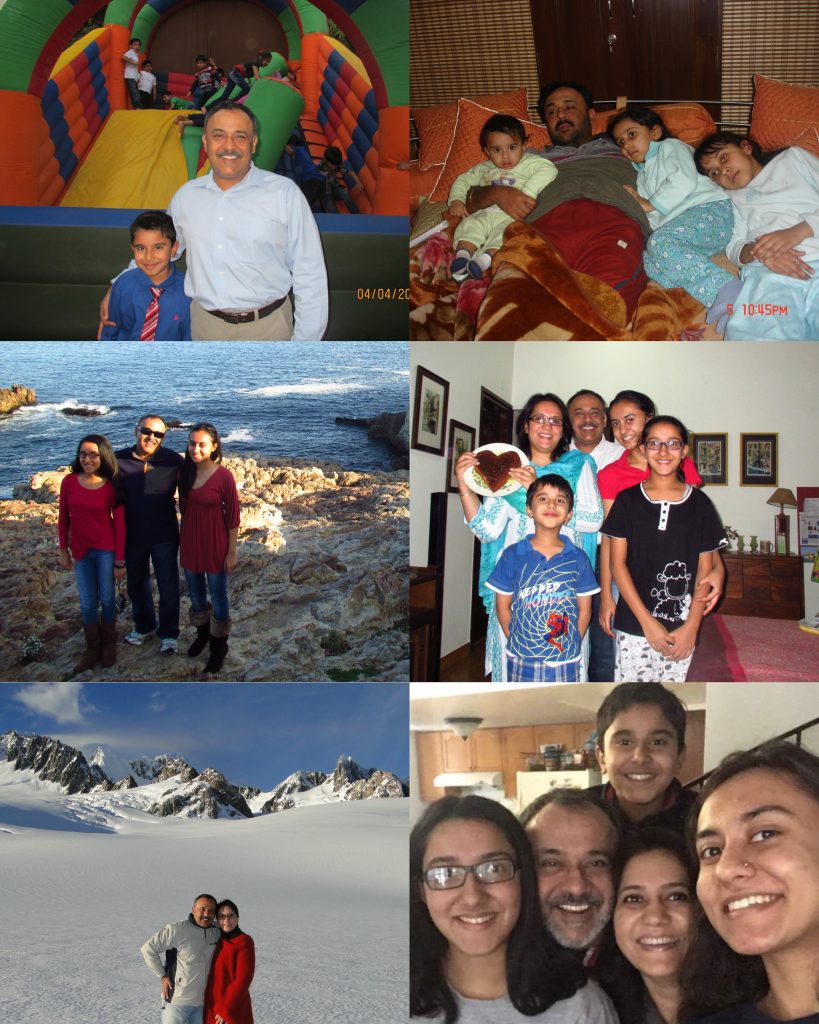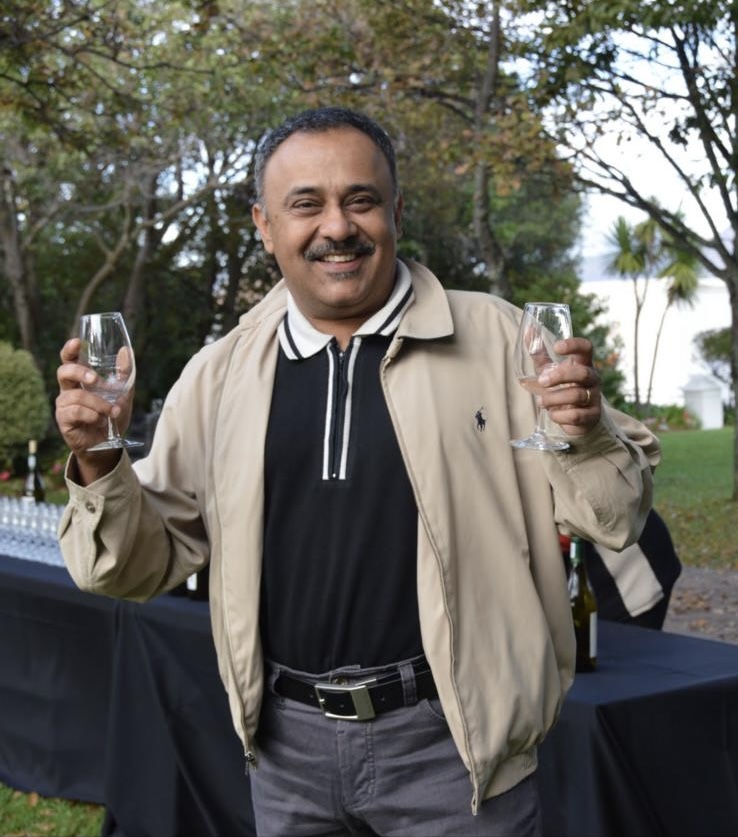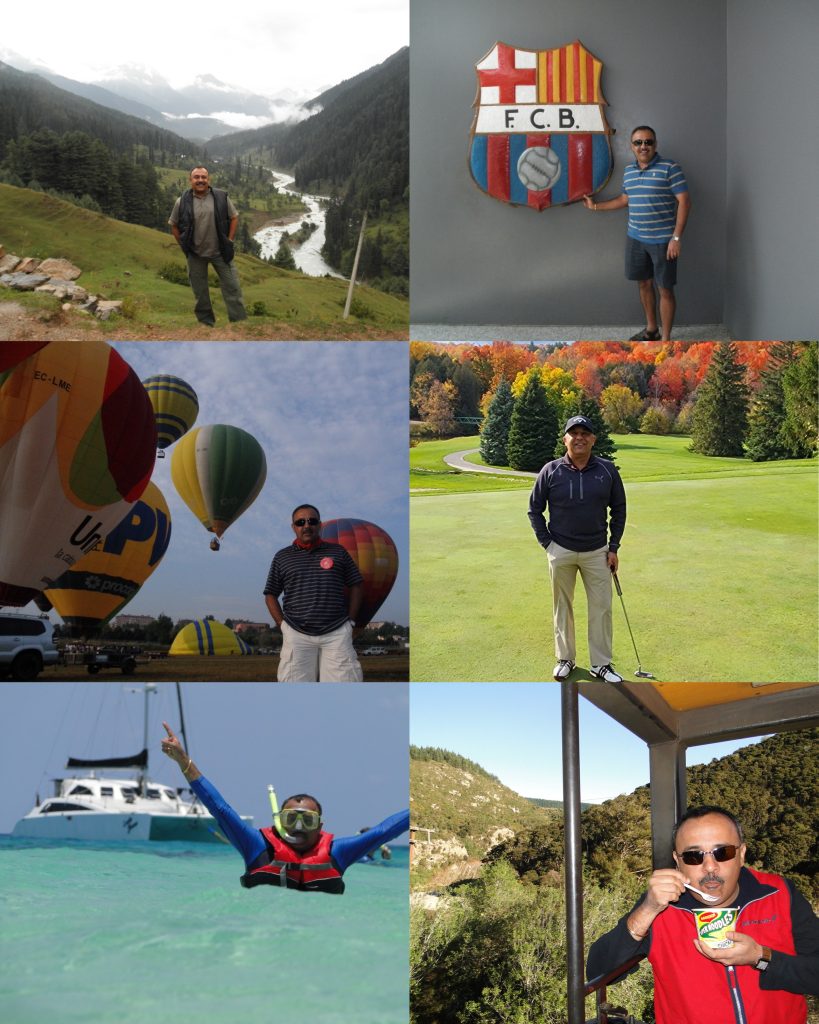
For my dad
Those you love cannot be lost, because they are always a part of you.
This blog is a Father’s Day dedication to my dad. Dad, I hope I am your daughter in every lifetime, and I hope we get to spend much more time with each other in the next one. I love you so much.
On Father’s Day this year, it will be exactly 844 days since my dad passed. To say that it gets easier with each day is completely false.
Anyone who knew my father knew he was one of the most learned men. You could ask him about traveling, history, fashion, mathematics, business, sports, anything at all, and he would know it. The fondest memories of my childhood are dancing with him to Lady Gaga’s “Bad Romance” in our living room, or watching the latest Christopher Nolan movie together. I always knew I had a cool dad.
When he passed, he was 59 and I was 23. I often think about how, if I live to the average human life expectancy of around 74, I will have lived more years without him than with him. But the kind of love he showed his children, even in the little time we had together, is enough to last a lifetime.
I will live the rest of my life knowing I have lost one of the only people who would always show up for me, love me more than he loved himself, and lay the entire world at my doorstep. That is not a loss you recover from, ever. But I want this grief to stay with me. I want to remember him every day for the rest of my life. I want to remember every sacrifice he made so his children could lead the lives they are leading right now.
Grief in Waves
There is no single word for grief. No proper definition you can reach for, no one word that can hold the array of emotions you feel when you experience it. It changes who you are as a person, and you can never quite return to who you were before.
I experienced grief in waves. The first hit in January 2023, when I found out my father had stage 3 cholangiocarcinoma. It came out of nowhere. He was the healthiest person I knew, the one who instilled the discipline of exercise in all of us. Even at the peak of COVID, he used to take my brother and me on 7 a.m. morning runs. So, needless to say, it came as more than a shock.
The day I found out, I was at university when I saw a text from my sister: “Dad has cancer.” I broke down at that moment, gave myself about thirty minutes to process it, and then went to my class. I could feel my body go straight into survival mode. There was no time to be sad about this, I thought, and I immediately started looking for the next steps, the solutions to the problem. This quote from Tuesdays with Morrie describes exactly how I felt:
“My old professor, meanwhile, was stunned by the normalcy of the day around him. Shouldn’t the world stop? Don’t they know what has happened to me? But the world did not stop, it took no notice at all, and as Morrie pulled weakly on the car door, he felt as if he were dropping into a hole.”
My entire life had turned upside down, and the world did not seem to care. Everything carried on as usual, and a large part of me was furious at that.
The second wave came when I researched his odds of beating it. It’s a rare cancer; the chances of surviving past five years are nearly zero. That was all I read, everywhere. It doesn’t matter, I thought. He’ll do it regardless. He has seen so much in life already; this will be just another obstacle he overcomes.
The third wave, and arguably the strongest, came in December 2023, when his surgeon confirmed that resecting the tumor was impossible. The cancer had already spread. We had spent the entire year preparing for that day. Countless nights in hospitals, multiple rounds of sepsis, round after round of chemo and immunotherapy. All of it was supposed to lead to this. The big win we had prayed for all year. But it didn’t come. I was inconsolable. I was grieving the life ahead of me, knowing he wouldn’t be in it.
This wave came with anger, too. I was mad at him. Why did he have to be such a good father? Maybe if he wasn’t, this would be easier. Why are there worse people in the world with no problems at all? Why is it always the good ones? There are no answers to these questions. The sooner I made peace with that, the better. Anticipatory grief is one of the worst feelings there is. You see exactly how your story ends, and you can do nothing to change it. And then you watch it end anyway.
After 13 rounds of chemotherapy, 15 rounds of immunotherapy, and 7 episodes of sepsis, my father passed away in February 2024.
I had spent my whole life afraid of exactly this. There are many answers to the question “What’s your biggest fear?” As a child, I heard everyone around me say heights, the water, bugs. Mine was always losing a parent. And then it happened. You question God, your faith, life, all of it. And yet, as a science student, I believe completely that energy cannot be created or destroyed, and that brings me peace, knowing my father is in the wind, the ocean, the birds, the flowers. But more than that, he is in my mom, my sister, and my brother.
Honoring Him
Not everyone gets to experience this kind of unconditional love and support from a father, and for that, even in the middle of this grief, I am forever grateful. I feel incredibly lucky to have had the best one. And yet I am heartbroken knowing he will miss the milestones still to come. Advising me on my career, dancing at my wedding, holding his grandchildren: he had plans to do it all.
But I carry his strength and his kindness with me every day. He taught his kids to live with purpose, to get creative, to help others, to travel. And that is exactly how I want to honor him: by being the kindest version of myself I can be, helping others as much as I can, traveling the world, trying to get better at golf, spending as much time as possible with my mom and siblings, and, most importantly, by taking care of my own health and letting him live through me.
I see him in all of us already. I see him in my sister when she plays chess, and in her determination to achieve whatever she sets her mind to. I see him in my brother on the golf course, in his knowledge of sports and movies, and in his witty humor. I see him in my mom’s hard work, in the way she raised us to be independent, giving us the freedom to explore the world while placing it at our feet. And I see him in all of us, in our shared passion to travel and build community.

What I’ve Learned
Grief taught me things I wish I’d learned some other way. If there’s anything I’d want you to take from all of this, it’s a few things I’ve learned about grieving, and about being around someone who is.
To anyone who has lost a parent, you already know how often people fall away. You lose friends. The people you thought would stay don’t always, and the ones who do are sometimes the ones you least expected. Family gets busy with their own lives too. The circle you started with quietly narrows. The world expects you to move on long before you’re ready to. That’s why it matters so much to build your own community, people who actually understand grief. For me that has meant leaning on others who have been through it, through volunteer work and organizations such as the Cholangiocarcinoma Foundation where that kind of loss is understood rather than explained. Find your people.
Losing a parent young will change how you see everything. When you have spent countless nights in a hospital watching people fight for their lives, small hurdles stop looking like hurdles at all. People around you will be in crisis over turning 21 or 25 or 30, and you will start to see aging as a privilege. Rejections lose their sting, because you know there is more to life than graduate school or a 9-to-5. You learn there is no such thing as “being behind”; those timelines are all superficial. And above everything, you learn that nothing matters more than your health.
The other thing grief taught me is how much the people around you matter, and how easy it is to get it wrong. So if you’re on the other side of it, watching someone you love grieve, know that the small things matter more than you’d think. Give them the chance to talk about their parent. The big days will always be hard, like birthdays and death anniversaries, but it’s the random check-ins and the small acts of service that get remembered. Most people understand these things much later in life. I learned them at 23.
Until the Next One
Finally, a poem found its way to me during my bereavement that says, more gently than I ever could, what I’ve come to believe. Clare Harner’s “Immortality”:
“Do not stand

   By my grave, and weep,

I am not there,

   I do not sleep--

I am the thousand winds that blow,

I am the diamond glints in snow.

I am the sunlight on ripened grain,

I am the gentle, autumn rain.

As you awake with morning's hush,

I am the swift, up-flinging rush

Of quiet birds in circling flight.

I am the day transcending night.

Do not stand

   By my grave, and cry--

I am not there,

I did not die.”
And he didn’t, not really. He is in the songs we danced to and the films we never finished, every country I add to the map he started, every early morning I push through because he taught me how.
Thank you for everything, Dad. Happy Father’s Day.
Written by Guntash Sandhu