
A Great British Biomarker Success Story
By Ingrid Laub
It all started with persistent unexplained nausea and vomiting. Elisabeth went to see her primary care physician, but her symptoms didn’t raise an alarm at first. It took a while for the doctor to order a scan. When the results came back in November 2024, Elisabeth was shocked to discover that she had intrahepatic cholangiocarcinoma impacting about 80% of her liver. All the experts agreed: it was non-resectable.
Elisabeth was just 33 years old. She’s an American expat living with her husband near Oxford, England. She began six months of treatment with the standard of care: chemotherapy drugs Gemcitabine and Cisplatin plus immunotherapy drug Durvalumab, followed by Durvalumab alone, which eventually failed to prevent growth.
Fortunately, Elisabeth has a savvy oncologist who understands the importance of genetic testing even though his practice is not strictly focused on biliary tract cancers. If present, certain biomarkers (or mutations) can be targeted with molecular-focused treatment or clinical trials.
Her doctor ordered a tissue biopsy. When this test failed (she’s not sure if it was due to an insufficient sample or other issues), they performed a liquid biopsy, which revealed a BRAF mutation. This was great news: there are therapies targeting the BRAF mutation that have been approved for use in the U.S. And because she has private health insurance, unlike most British residents who rely on the National Health Service, she was able to get insurance coverage for this targeted therapy.
Targeted therapies can be life-saving, but just like any cancer treatment, some patients struggle with side effects. Elisabeth began targeted treatment in September 2025 in the form of daily pills. The first combination of drugs was Dabrafenib (a BRAF inhibitor that blocks mutated BRAF proteins, which tell cancer cells to grow) and Trametinib (a MEK inhibitor that blocks MEK enzymes working in the same cell-growth pathway). Unfortunately, she developed SIRS, or Systemic Inflammatory Reaction Syndrome, resulting in a week in the ICU.
To avoid SIRS, she was switched to a new combination of drugs, Encorafenib and Binimetinib, which is not FDA-approved for cholangiocarcinoma but is used off-label by some doctors. It was approved as an experimental treatment by her private insurance, and she received a full dose each day.
As any patient with cholangiocarcinoma knows, with each new drug comes the possibility of new side effects. Elisabeth’s new regimen led to Hyperkalemia, dangerously high potassium levels, which caused her to be admitted to the hospital multiple times from October through December. Her doctor took an innovative, personalized approach to treating the cancer while managing the side effects, restarting Encorafenib and Binimetinib at a reduced dose and only 1 day per week. From January through August 2026, the treatment was increased by one day each month, allowing Elisabeth’s sensitive body to gradually adapt. Her potassium levels were also managed by adding Lokelma to her regimen. She also developed moderate fatigue and adrenal insufficiency (believed to stem from long-term steroid use and/or immunotherapy), requiring maintenance steroids three times a day.
Then this spring, Elisabeth heard from other patients encouraging her to have her case reassessed to see if the cancer had shrunk enough to allow for resection. She was able to get a new surgical consultation and received the news she was hoping for: she was now a surgical candidate!
In late August 2026, surgeons removed approximately 70% of Elisabeth’s liver and various lymph nodes. The procedure went smoothly with no major complications. The doctors said they had never seen someone with such a good response to this BRAF-targeted treatment. When we spoke three weeks later, Elisabeth was a bit tired but was slowly resuming normal activities. Her liver will regenerate, possibly growing back to its original size in as little as three months.
Asked what she’s learned through her experience, Elisabeth stressed the importance of advocating for yourself; asking questions; learning as much as possible about this disease; not being afraid to get a second opinion; and, of course, getting genetic testing to see if you have any actionable biomarkers. If she hadn’t pushed for a new surgery consultation, she might not have discovered that her tumor had become resectable. She has gained knowledge, hope, and encouragement by speaking with other patients and through organizations such as the Cholangiocarcinoma Foundation and the AMMF, the U.K.’s cholangiocarcinoma charity. She and her family have done research, viewed webinars, and attended the CCF Regional Symposium in Boston to empower themselves.
What’s next in Elisabeth’s journey? She’ll repeat genetic testing (this time with tissue from the part of her liver that was removed) to see if there’s anything that wasn’t present in her liquid biopsy, restart the targeted therapy, and have a scan in three months. While she’s now considered NED (No Evidence of Disease), there could still be microscopic cancer cells in her body. She recognizes that cholangiocarcinoma is an ongoing battle, both physically and mentally. With the support of her family, the strength of the cholangiocarcinoma community, and the hope from her biomarker testing, Elisabeth is ready for the monitoring and maintenance required to keep her disease at bay.

Photos
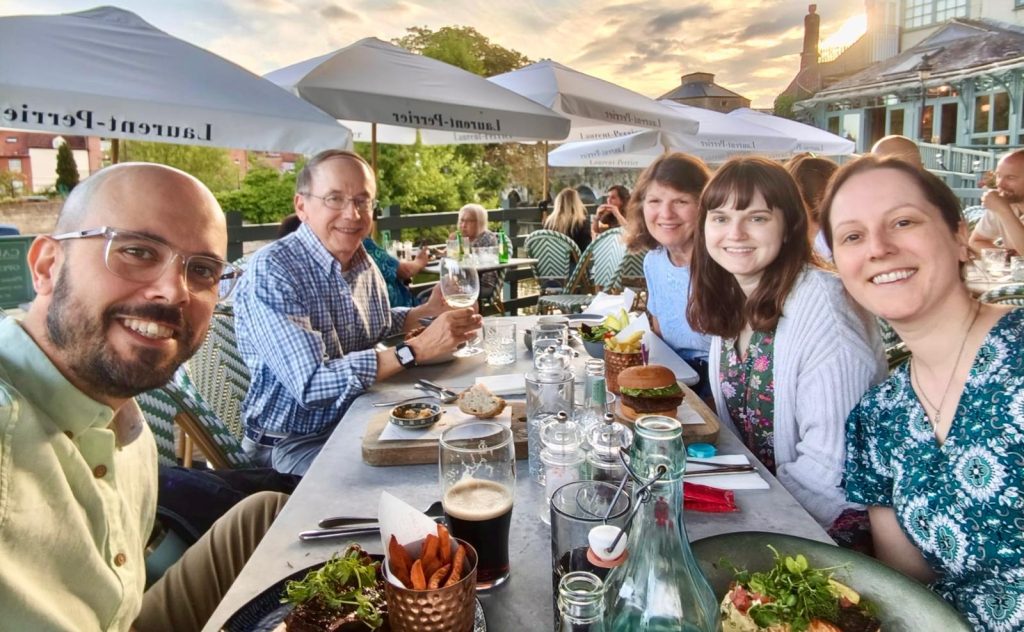
- Dinner with husband and family the night before the surgery near Oxford, UK
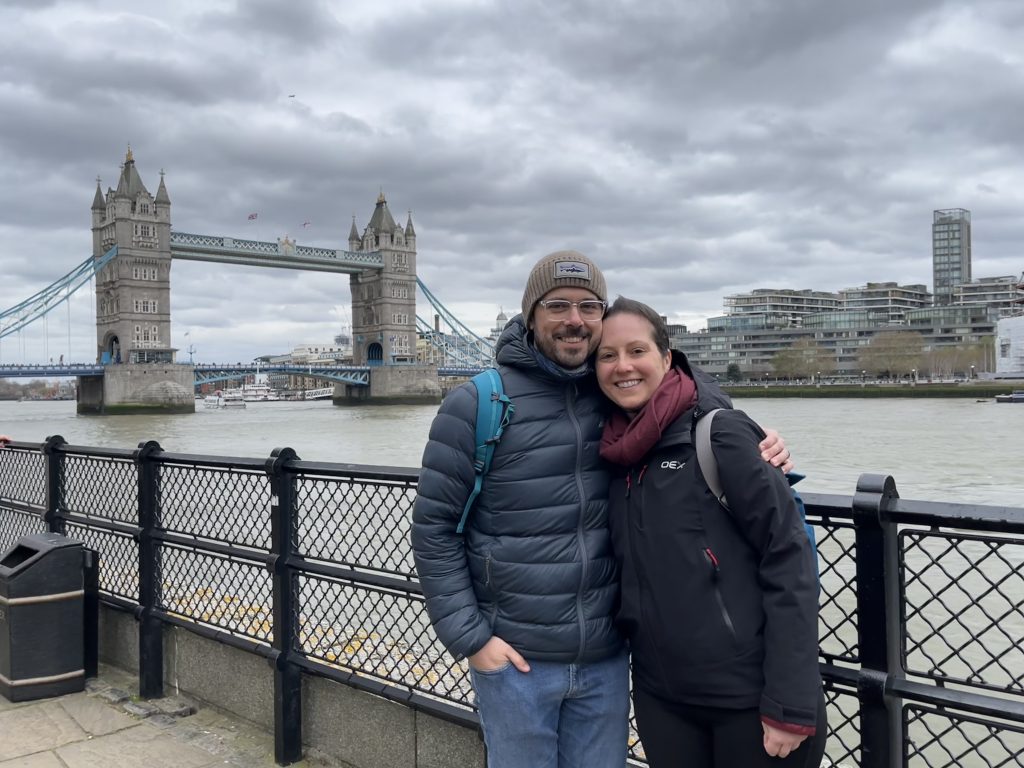
- In London with husband, Antonio
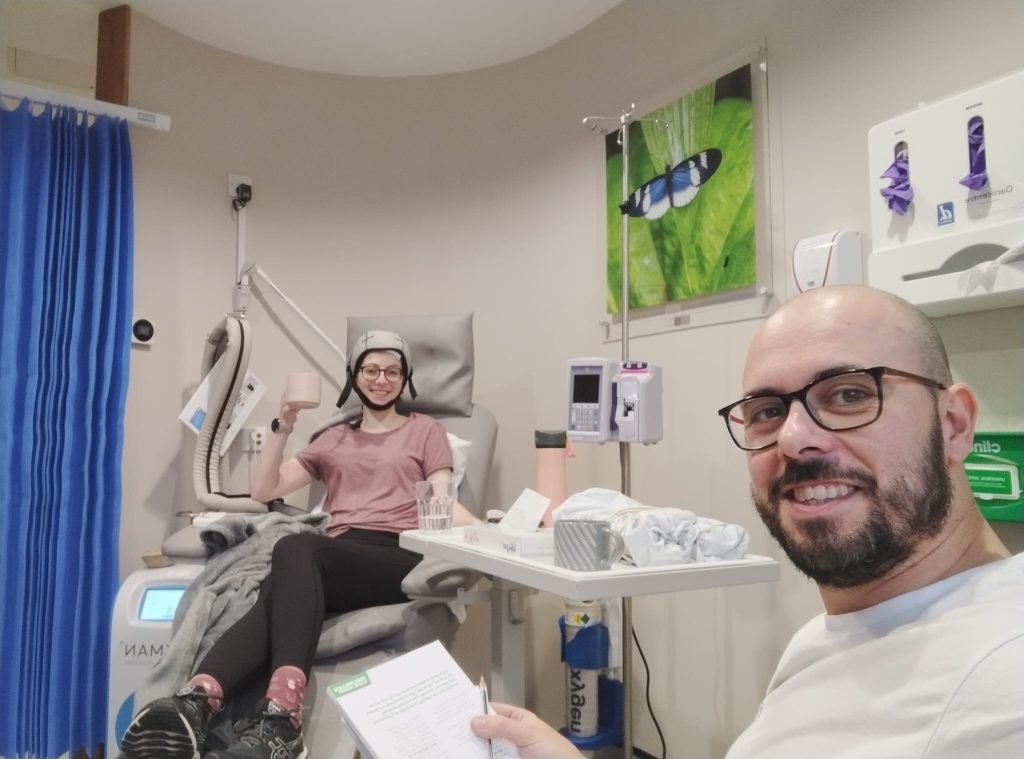
- Cold Capping during chemotherapy
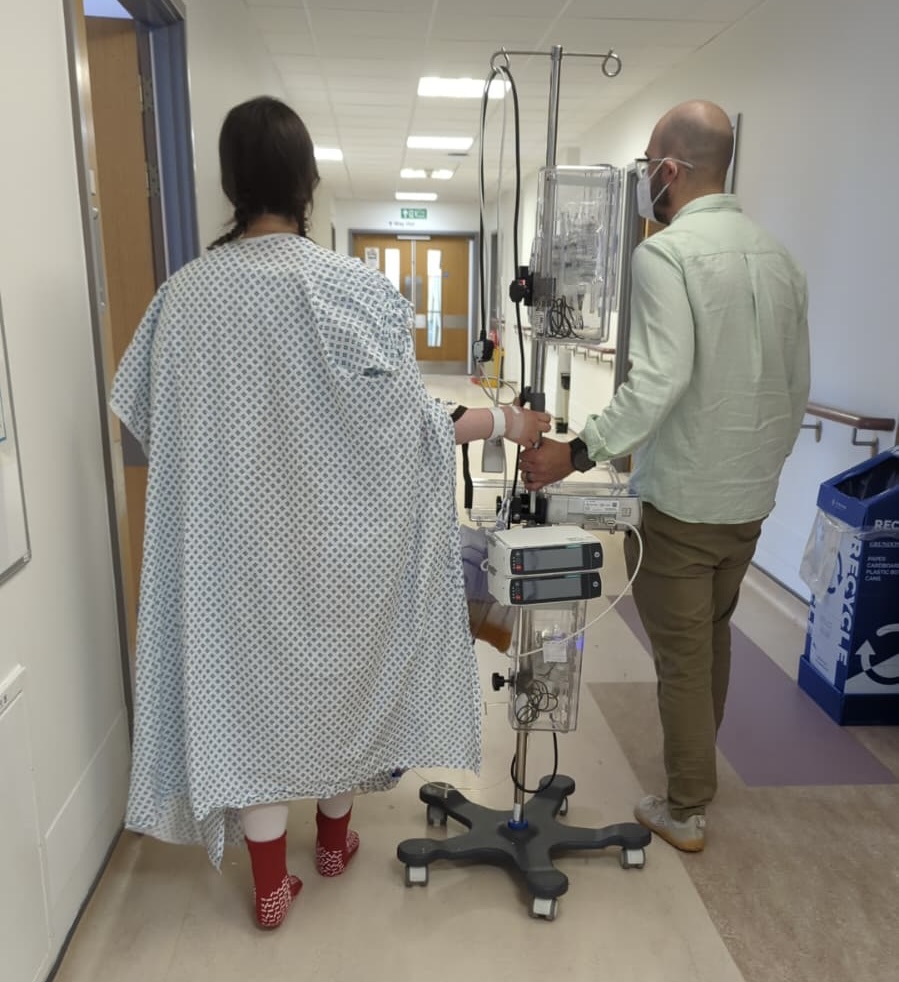
- In the hospital after liver resection
- Photo with sister wearing our Little Words Project Bracelets “Happy to be here” in memory of Sydney Towle, who inspired us with her positive spirit