
Biliary Tract Cancer Cell Lines & PDX Resources
These cell lines are available under MTA’s from the designated repositories. Please click on the links in the right column for contact information of each repository and specific instructions for requesting cell lines.
| NAME | Species | Cell line or PDX SOURCE | DESCRIPTION | LINK or contact person | Mutation | Reference/ Publication |
| EGI-1 | Human | DSMZ (ACC-385) | Anatomic subtype not specified | https://www.dsmz.de/collection/catalogue/details/culture/ACC-385 | Scherdin G., Garbrecht M. and Klouche M. (1987) In vitro interaction of á-difluoromethylornithine (DFMO) and human recombinant interferon-a (rIFN-a) on human cancer cell lines.. Immunobiology 175: 1-143. | |
| TFK-1 | Human | DSMZ (ACC-344) | EHCCA | https://www.dsmz.de/collection/catalogue/details/culture/ACC-344 | HER2 | 14911 |
| CCC-5 | Human | DSMZ (ACC-810) | EHCCA | https://www.dsmz.de/collection/catalogue/details/culture/ACC-810 | ||
| MUG-CCArly | Human | DSMZ (ACC-960) | EHCCA | https://www.dsmz.de/collection/catalogue/details/culture/ACC-960 | ||
| ICC11 | Human | DSMZ (ACC-11001) | IHCCA | https://www.dsmz.de/collection/catalogue/details/culture/ACC-11001 | FGFR2 fusion | |
| ICC5 | Human | DSMZ (ACC-11005) | IHCCA | https://www.dsmz.de/collection/catalogue/details/culture/ACC-11005 | IDH1 | |
| ICC12 | Human | DSMZ (ACC-11006 | IHCCA | https://www.dsmz.de/collection/catalogue/details/culture/ACC-11006 | ||
| ICC13-7 | Human | DSMZ (ACC-11007) | IHCCA | https://www.dsmz.de/collection/catalogue/details/culture/ACC-11007 | FGFR2 fusion | |
| ICC10-8 | Human | DSMZ (ACC-11025) | IHCCA | https://www.dsmz.de/collection/catalogue/details/culture/ACC-11025 | ||
| ICC18 | Human | DSMZ (ACC-11026) | IHCCA | https://www.dsmz.de/collection/catalogue/details/culture/ACC-11026 | ||
| ICC10 | Human | DSMZ (ACC-11027) | IHCCA | https://www.dsmz.de/collection/catalogue/details/culture/ACC-11027 | FGFR2 fusion | |
| ICC10-6 | Human | DSMZ (ACC-11028) | IHCCA | https://www.dsmz.de/collection/catalogue/details/culture/ACC-11028 | FGFR2 fusion | |
| KKU-100 | Human | JCRB (JCRB1568) | Human poorly differentiated cholangiocarcinoma cell line established from biliary tract. | https://cellbank.nibn.go.jp/english | Sripa B,Leungwattanawanit S,Nitta T,Wongkham C,Bhudhisawasdi V,Puapairoj A,Sripa C,Miwa M World J Gastroenterol. 2005 Jun 14;11(22):3392-7 | |
| KKU-213 | Human | JCRB(1557) | IHCC | https://cellbank.nibn.go.jp/~cellbank/en/search_res_det.cgi?ID=7076 | ||
| MMNK-1 | Human | JCRB (JCRB1554) | Highly differentiated immortalized human cholangiocyte cell line (non-cancer) | https://cellbank.nibn.go.jp/~cellbank/en/search_res_det.cgi?ID=7073 | Maruyama M,Kobayashi N,Westerman KA,Sakaguchi M,Allain JE,Totsugawa T,Okitsu T,Fukazawa T,Weber A,Stolz DB,Leboulch P,Tanaka N Transplantation. 2004 Feb 15;77(3):446-51 | |
| OZ | Human | JCRB; JCRB1032 | IHCCA (Derived from metastatic site: Ascites) | https://cellbank.nibn.go.jp/~cellbank/en/search_res_det.cgi?ID=2397 | Homma S,Nagamori S,Fujise K,Yamazaki K,Hasumura S,Sujino H,Matsuura T,Shimizu K,Kameda H,Takaki K Gastroenterol Jpn. 1987 Aug;22(4):474-9 | |
| TGBC1TKB | Human | RCB (RCB1129) | GBC (Derived from metastatic site: Lymph node) | https://cellbank.brc.riken.jp/cell_bank/CellInfo/?cellNo=RCB1129&lang=En | ||
| YSCCC | Human | RCB (RCB1549) | IHCCA | https://cellbank.brc.riken.jp/cell_bank/CellInfo/?cellNo=RCB1549&lang=En | ||
| HuCCT1 | Human | IHCCA | Dr. Lawrence Kwong [email protected] | |||
| OZ | Human | IHCCA | Dr. Lawrence Kwong [email protected] | |||
| CC-LP-1 | Dr. Lawrence Kwong [email protected] | |||||
| *CC-SW-1 | Dr. Lawrence Kwong [email protected] | This cell line differs from the one in DepMap. The CNV profile more closely matches the original publication (Shimizu, Exp Cancer, 1992) | ||||
| Huh-28 | Dr. Lawrence Kwong [email protected] | |||||
| SNU-245 | Dr. Lawrence Kwong [email protected] | |||||
| SNU-1196 | Dr. Lawrence Kwong [email protected] | |||||
| WITT | Dr. Lawrence Kwong [email protected] | |||||
| TFK-1 | Human | ACC 344 | Dr. Lawrence Kwong [email protected] | |||
| Huh-28 | IHCCA | Dr. Giovanni Brandi [email protected] Dr. Simona Tavolari [email protected] | ||||
| TFK-1 | EHCCA | Dr. Giovanni Brandi [email protected] Dr. Simona Tavolari [email protected] | ||||
| SNU-245 | EHCCA | Dr. Giovanni Brandi [email protected] Dr. Simona Tavolari [email protected] | ||||
| SNU-1079 | IHCCA | Dr. Giovanni Brandi [email protected] Dr. Simona Tavolari [email protected] | ||||
| WITT | EHCCA | Dr. Giovanni Brandi [email protected] Dr. Simona Tavolari [email protected] | ||||
| EGI1 | EHCCA | Dr. Giovanni Brandi [email protected] Dr. Simona Tavolari [email protected] | ||||
| H69 | Immortalized cholangiocytes | Dr. Giovanni Brandi [email protected] Dr. Simona Tavolari [email protected] | ||||
| HuCCt1 | Human | IHCCA | Dr. Vaibhav Sahai [email protected] | |||
| SB1-IDH1 R132C | Mouse | SB1-derived | Isogenic murine model | Dr. Daniel Zabransky [email protected] | IDH1 R132C | PMID: 39626209 |
| SB1-IDH1 R132R (control) | Mouse | SB1-derived | Isogenic murine model | Dr. Daniel Zabransky [email protected] | WT control (R132R silent control) | PMID: 39626209 |
| SB1 | Mouse | Mayo Clinic (G. Gores lab) | Murine cholangiocarcinoma model, YAP-driven | Dr. Greg Lesinski [email protected] | YAP-driven signaling | Reference: Smoot RL, et al: Platelet-derived growth factor regulates YAP…. J Cell Biochem 119:824–836, 2018 |
| FAC | Mouse | Mayo Clinic (S. Ilyas lab) | Syngeneic murine cholangiocarcinoma model | Dr. Greg Lesinski [email protected] | Fbxw7ΔF with constitutive AKT activation | Reference: Tomlinson JL, et al: Syngeneic murine models with distinct immune microenvironments represent subsets of human intrahepatic cholangiocarcinoma. J Hepatol 80:892–903, 2024 |
| URCCA4.3 | Mouse | University of Rochester (D. Linehan lab) | Murine intrahepatic cholangiocarcinoma model | Dr. Luis Ruffolo [email protected] | Kras^G12D; Tp53−/− | Reference: Ruffolo LI, et al: G..M-CSF drives myelopoiesis, recruitment and polarisation… Gut 71:1386–1398, 2022 |
| EGI1 | Human | eCCA | Dr. Jesús Bañales [email protected] Dr. Pedro Rodrigues [email protected] | KRAS, GNAS, CDKN2A | ||
| TFK1 | Human | eCCA | Dr. Jesús Bañales [email protected] Dr. Pedro Rodrigues [email protected] | TP53 | ||
| WITT or SK-Cha-1 | Human | eCCA | Dr. Jesús Bañales [email protected] Dr. Pedro Rodrigues [email protected] | WT | ||
| HUCCT1 | Human | iCCA | Dr. Jesús Bañales [email protected] Dr. Pedro Rodrigues [email protected] | KRAS (codon 12), TP53, MSH6 | ||
| TKKK | Human | iCCA | Dr. Jesús Bañales [email protected] Dr. Pedro Rodrigues [email protected] | WT | ||
| RBE | Human | iCCA | Dr. Jesús Bañales [email protected] Dr. Pedro Rodrigues [email protected] | IDH1, KRAS | ||
| SNU1079 | Human | iCCA | Dr. Jesús Bañales [email protected] Dr. Pedro Rodrigues [email protected] | IDH1 |
updated June 26, 2026
These cell lines are available under MTA’s from the designated repositories. Please click on the links in the right column for contact information of each repository and specific instructions for requesting cell lines.
We would like this resource to be comprehensive and widely available to those who are interested in research. It is our desire to provide interested researchers with as much validated information as we can to expand the collaborative CCA research community. If you are aware of available resources not listed, please contact us.
A number of human biliary tract cancer cell lines have been reported in the literature, including cell lines derived from intrahepatic cholangiocarcinoma, extrahepatic cholangiocarcinoma, and gall bladder cancer. The table lists commonly used biliary tract cell lines available from repositories. Also listed is an immortalized but non-transformed human bile duct-derived cell line.
If you have additional information about human biliary tract cancer cell lines, please contact [email protected]
PDX Finder
An open global cancer research portal to Patient Derived Xenograft models.
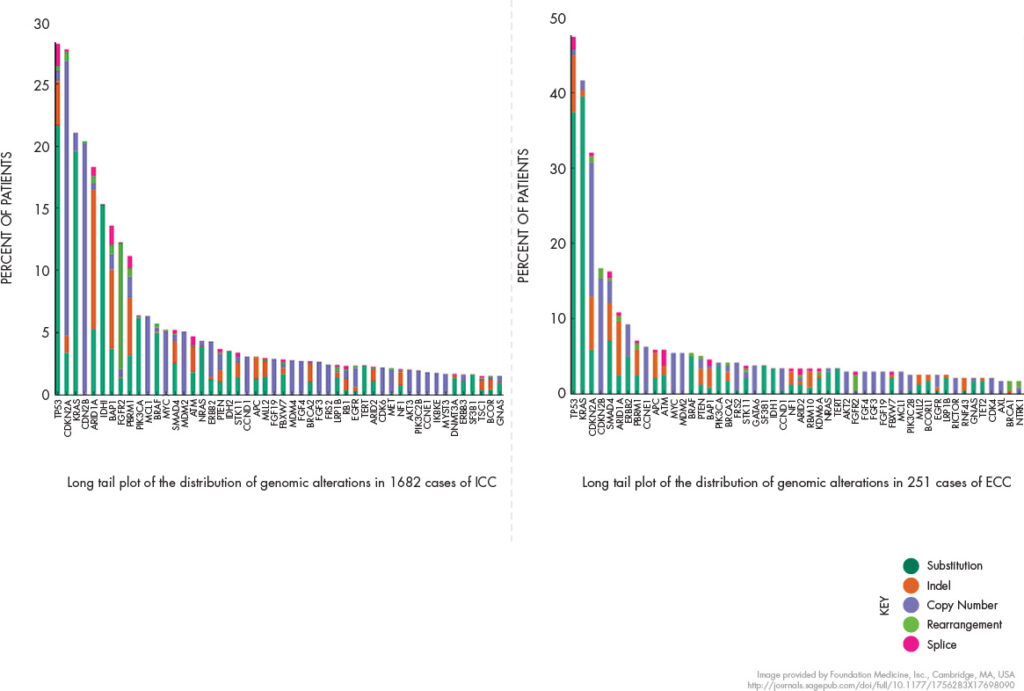
Cholangiocarcinoma (CCA) Mutations
Research Network
Visit the International Cholangiocarcinoma Research Network (ICRN)